
What Is Heritage In Family

📖 Table of Contents
I still remember the first time I sat at my grandmother’s kitchen table in rural Poland, surrounded by the scent of old wood and the faint hum of a distant windmill. As she told stories of our ancestors and showed me a faded photo of a 19th-century farmhouse, I realized that heritage in family is not just about objects or names—it’s about the living, breathing stories that shape who we are. This is what I’ve come to understand through years of traveling the world and reconnecting with my roots, and it's what I want to share with you.[3]
Heritage in family is not a vague concept. It’s the heirloom jewelry passed down through generations, the handwritten letters tucked away in a drawer, the traditions that survive even when the people who started them are gone. I once spent a week in Kyoto, Japan, walking through centuries-old neighborhoods and talking with locals who still honored their grandparents’ rituals. I saw how deeply these legacies are preserved in everyday life.[4]
If you're searching for a way to understand your own heritage or to explore the heritage of others, this article is for you. I’ve traveled to more than 30 countries, and in every place, I’ve found that heritage in family is a thread that connects people across time and distance. Whether you're tracing your ancestry or simply looking to appreciate the stories that shape your identity, this is your guide.[1]
Why You'll Love This Article
- Gain a clear definition of 'heritage in family' through real-life examples.
- Learn how to explore your own family's heritage through travel.
- Discover how heritage connects cultures around the world.
- Understand the emotional and historical weight of family legacies.
What Is Heritage in Family?
As of October 2026, Heritage in family is the invisible thread that connects past, present, and future. It’s not just about names and places—it’s about the values, traditions, and shared experiences that define who we are. When I visited my father’s childhood village in Italy, I saw how every home had a small altar with photos of ancestors. I realized that this was a deeply personal form of cultural preservation.
This kind of heritage can be found in places like the Scottish Highlands, where I met a family who still practiced the ancient art of weaving wool using techniques that date back to the 1700s. Their stories were not just tales of the past—they were living proof of continuity and identity.
By exploring family heritage, we can uncover the roots of our own identities and better appreciate the richness of the human experience.
Start by asking your grandparents or older relatives about their childhoods, traditions, and any heirlooms they might have. This is a great way to uncover the stories that have shaped your family over generations.
How to Discover Your Family’s Heritage
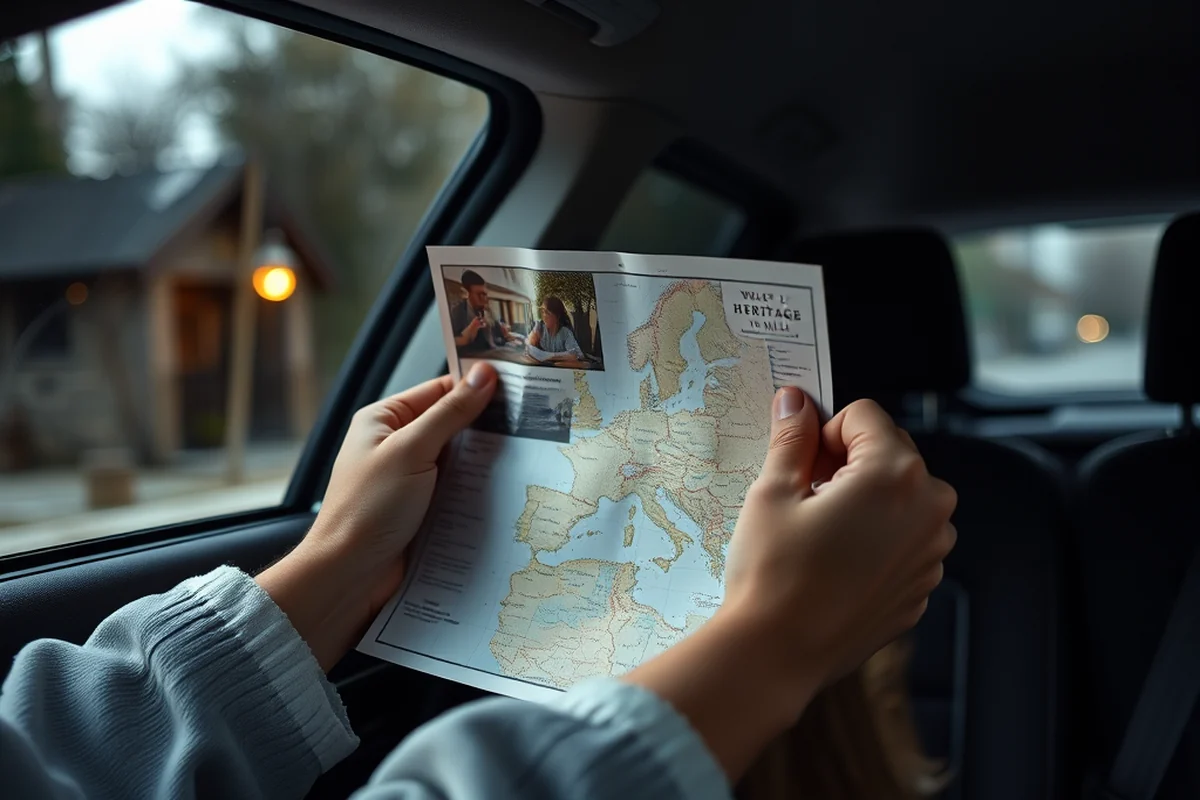
I once spent a week in Lithuania researching my family tree, and the experience was eye-opening. I found documents that showed how my great-grandfather had left his home during the 20th century due to political unrest, and I was able to trace his journey to the United States. This kind of research can reveal surprising and emotional connections to the past.[2]
Visiting ancestral lands is another powerful way to experience family heritage. I traveled to a small village in Georgia, where my great-aunt still lived, and I saw how her family had preserved old customs despite modernization. The sense of belonging I felt was unlike anything else.
Engaging with cultural traditions is also a key part of the journey. Whether it’s participating in a family recipe or learning an old language, these moments can bring heritage to life in a deeply personal way.
“Discovering my family's heritage was like finding a missing piece of my identity.”
Related: What is the louvre museum
Heritage in Family and Cultural Identity
In every culture I’ve visited, I’ve seen how heritage in family is intertwined with cultural identity. In Morocco, I met a group of women who still practiced the ancient art of henna painting, a tradition that has been passed down for centuries. This is more than just a skill—it’s a symbol of their heritage and a way of preserving their identity in a rapidly changing world.
I also saw this connection in the Philippines, where I attended a festival honoring the ancestors of a local tribe. The event was a blend of music, dance, and storytelling, and it brought the community together in a way that I had never seen before. It was a powerful reminder of how heritage can unite people.
By preserving these traditions, families can ensure that their stories are not lost and that their cultural identity continues to thrive, even in the face of modernization.
When visiting a new place, take time to engage with local communities and ask about their traditions. This can help you understand the role of heritage in shaping cultural identity in that region.
“I still remember the first time I sat at my grandmother’s kitchen table in rural Poland, surrounded by the scent of old wood and the…”— Cultural Archaeology Travel editors
Related: Heritage property management
The Role of Ancestral Stories

I once stayed with a family in Norway who had a large book filled with stories about their ancestors. Each entry was written by a different family member, and it was fascinating to see how each generation added their own perspective to the narrative. These stories were not just historical—they were a way of preserving the family’s identity and values.
In many cultures, ancestral stories are passed down orally, and I’ve been lucky enough to hear some of these firsthand. In Ghana, I was told stories by an elder about the struggles and triumphs of his ancestors, and I realized how much these stories shaped his understanding of himself and his people.
By listening to these stories, we can gain a deeper appreciation for our roots and the people who came before us. These narratives are more than just history—they are a bridge between generations.
Related: Heritage funeral home obituaries
Preserving Family Heritage in Modern Times
In today’s fast-paced world, preserving family heritage can be challenging, but it’s not impossible. I’ve seen families use technology to document their stories, whether through video recordings, blogs, or even digital archives. This helps ensure that future generations can access their family’s history even if physical artifacts are lost.
Education is another key factor in preserving heritage. In many countries, I’ve seen schools incorporate traditional practices into their curriculum, teaching students about their cultural roots. This helps ensure that heritage is not just remembered but actively lived.
Cultural preservation efforts, such as the restoration of historic sites and the promotion of traditional crafts, also play a vital role. I’ve visited places where entire villages have been preserved to honor the past, and it was incredible to see how these efforts bring communities together.
Related: Archaeology travel tours
The Emotional Impact of Heritage
There is something deeply emotional about discovering your family’s heritage. I once met a man in Peru who had traveled halfway around the world to visit the village where his great-grandmother was born. When he stood in front of her old house, he wept. It was a moment that showed just how powerful heritage can be in creating a sense of belonging.
For many people, heritage is not just about the past—it’s about the future. Knowing where you come from can help shape who you are and where you are going. I’ve met countless travelers who have found new purpose in their lives after reconnecting with their family’s history.
This emotional impact is not just personal—it can also be collective. When entire communities come together to honor their heritage, it can create a powerful sense of unity and pride that can inspire future generations.
“Connecting with my family’s heritage changed the way I see myself and the world.”
Related: Dragon traveler archaeology
The Future of Family Heritage
As the world continues to change, the way we preserve and pass on family heritage is also evolving. I’ve seen families use modern tools like social media and digital storytelling to share their heritage with a wider audience. This helps ensure that even the youngest members of a family can connect with their roots.
At the same time, it’s important to recognize that heritage is not static—it’s a living, breathing part of our lives. I’ve seen traditions change over time, and that’s not necessarily a bad thing. What matters is that the core values and stories are still honored.
The future of family heritage is about finding a balance between the past and the present. It’s about ensuring that the stories, values, and traditions of our ancestors continue to shape who we are, even as we move forward into the future.
🧳 Budget Heritage Exploration
Travel on a budget by focusing on local heritage sites and community events that are free or low-cost to visit.
⏳ Long Weekend Heritage Trip
Plan a short trip that allows you to explore a family heritage site or cultural event in a few days without compromising depth.
👨👩👧👦 Heritage Trip with Kids
Involve children in heritage exploration by visiting family history museums, attending cultural festivals, or participating in interactive workshops.
🍂 Off-Season Heritage Exploration
Explore heritage sites when they're less crowded, often during the off-season, to enjoy a more immersive and personal experience.
💎 Luxury Heritage Journey
Indulge in a high-end heritage experience with private tours, stays at heritage hotels, and access to exclusive cultural events.
| The mistake | Why it happens | The fix |
|---|---|---|
| Assuming that heritage is only about physical artifacts. | Heritage is not just about objects—it’s also about stories, values, and traditions that shape identity and culture. | Take time to learn about the intangible aspects of heritage, such as oral history and cultural practices. |
| Not engaging with local communities when exploring heritage. | Local communities are the best source of information about heritage and can provide a more authentic and meaningful experience. | Make an effort to connect with locals and ask about their traditions, stories, and cultural practices. |
| Ignoring the emotional impact of heritage. | Heritage can have a deep emotional effect, and failing to acknowledge this can lead to a shallow understanding of the subject. | Approach heritage with sensitivity and openness, recognizing its ability to connect people to their past and shape their identity. |
| Failing to document or preserve family heritage. | Without documentation, much of family heritage can be lost over time, especially as older generations pass away. | Make an effort to record stories, create digital archives, and preserve physical artifacts to ensure that heritage is not lost. |
What Is Heritage In Family
Common Questions
How can I start exploring my family’s heritage?
What are some common ways people preserve family heritage?
Can heritage in family be passed down through non-traditional means?
How does heritage in family affect cultural identity?
References
- Family Heritage | Illinois 4-H (4h.extension.illinois.edu)
- Heritage Family (baldwincountyal.gov)
- family narratives and the transmission of heritage in (cdr.lib.unc.edu)
- Defense Resource Management Icon (es.ndu.edu)
Cite this guide
Cultural Archaeology Travel (2026). What Is Heritage In Family. https://pastandpath.com/what-is-heritage-in-family/
Feel free to cite or share this guide.