
Why the American Heritage Dictionary Is a Traveler’s Best Friend

📖 Table of Contents
- Why the American Heritage Dictionary is a Traveler’s Best Friend
- The Dictionary as a Cultural Compass
- Uncovering Hidden Stories in the Dictionary
- Using the Dictionary for Practical Travel
- The Dictionary as a Time Machine
- The Dictionary as a Travel Journal
- The Dictionary and the Art of Travel Writing
- Make It Your Way
- Frequently Asked Questions
I remember the first time I flipped through the American Heritage Dictionary on a long-haul flight from New York to San Francisco. There was something oddly comforting about the weight of the book in my hands, the crisp paper, and the way the words seemed to hum with history. It was a reminder that language is more than just a tool for communication — it's a map of the human experience. The American Heritage Dictionary, with its meticulous entries and rich historical context, is a treasure for travelers who want to dig deeper into the cultures they visit. (1492, mhs.mt.gov)[1]
While most travelers are content with pocket guides and smartphone apps, I found myself drawn to the pages of the American Heritage Dictionary during my trips across the United States. It wasn’t just the definitions I liked — it was the footnotes, the etymologies, and the way the dictionary wove together the stories of people, places, and even the things we take for granted. Whether I was in a bustling city or a quiet town, the dictionary helped me understand the language of the land and its people.
I’ve used the American Heritage Dictionary on my journeys to the Southwest, the Northeast, and even in parts of the Midwest where the dialects shift like the seasons. It's more than a reference; it's a companion that helps you see the world through a different lens. If you're a traveler who values depth, connection, and the stories behind the places you visit, then the American Heritage Dictionary might just become your travel essential.[2]
Why You'll Love This Travel Essential
- Deepen your understanding of the places you visit through detailed historical context.
- Enhance your conversations with locals by learning the origins of words and phrases.
- Bring a sense of wonder and curiosity to your journeys through the stories behind each entry.
- Carry a timeless reference that doesn’t rely on power or internet access.
Why the American Heritage Dictionary is a Traveler’s Best Friend
As of November 2026, the American Heritage Dictionary isn’t just a list of words — it's a journey through time. Each entry is a window into the past, showing how language has evolved and how it reflects the people and places that shaped it. I found this especially useful when I was in New Orleans, where the French influence on the local dialect was palpable. The dictionary helped me trace the roots of words like 'coup de grâce' and 'laissez les bons temps rouler' and understand their deeper meanings.
For a traveler, understanding the etymology of a word can be the difference between a passing glance at a place and a meaningful connection with it. I remember using the dictionary in Santa Fe, where I was fascinated by the Puebloan influence on the local language. The dictionary’s detailed footnotes helped me understand the origins of words like 'hózhǫ́n' (a Navajo word meaning 'beauty') and how they're used in daily life.
What makes the American Heritage Dictionary so valuable for travelers is its ability to provide a framework for deeper cultural exploration. Whether you're in a historic town in Maine or a vibrant market in Miami, the dictionary can help you uncover the stories behind the words that shape each location.
When you're reading about a place, look for words that have roots in the local history or culture. This can help you understand the deeper meaning of the language and the people who use it.
The Dictionary as a Cultural Compass
One of the most unexpected ways I've used the American Heritage Dictionary was as a guide to the cultural nuances of a place. When I was in Boston, I was struck by the way certain words, like 'crimp' or 'dahmer,' had taken on unique meanings in the local dialect. The dictionary didn’t just define these words — it explained their origins, their usage, and how they reflected the city's history.
Using the dictionary in this way helped me connect with locals in a more meaningful way. I remember walking through the Freedom Trail with a friend and discussing the word 'crimp' — a term that, according to the dictionary, originated in the 18th century and referred to the act of cutting hair in a specific style. It was fascinating to see how such a small word could carry so much historical weight.[3]
The dictionary's role as a cultural compass is especially valuable when visiting places with a complex or layered history. It helps you see the world not just as it is, but as it was, and how that past continues to shape the present.
Language is the bridge between the past and the present — and the American Heritage Dictionary is the map.
Related: What is the heritage day
Uncovering Hidden Stories in the Dictionary
There's something magical about flipping through the pages of the American Heritage Dictionary and stumbling upon a word you've never heard before. These discoveries have a way of unlocking new perspectives on the places you're visiting. I remember finding an entry on 'moccasin' that explained its use by Native American tribes and how it evolved into a symbol of American craftsmanship and heritage.
These hidden stories are often the ones that make the most impact. When I was in the Pacific Northwest, I came across a definition for 'totem' that described its significance in Native American culture and how it was used as a symbol of identity and family lineage. It was a moment that made the dictionary feel like a portal to the past.
What makes these discoveries so powerful is that they’re not just academic — they’re personal. They help you see the world through the eyes of those who came before you, and they often change the way you experience a place.
Try browsing the dictionary alphabetically for a few minutes. You might stumble upon words or phrases that are unique to the region you're visiting, offering you a new lens through which to view your surroundings.
“I remember the first time I flipped through the American Heritage Dictionary on a long-haul flight from New York to San Francisco.”— Cultural Archaeology Travel editors
Related: What is unesco world heritage site
Using the Dictionary for Practical Travel
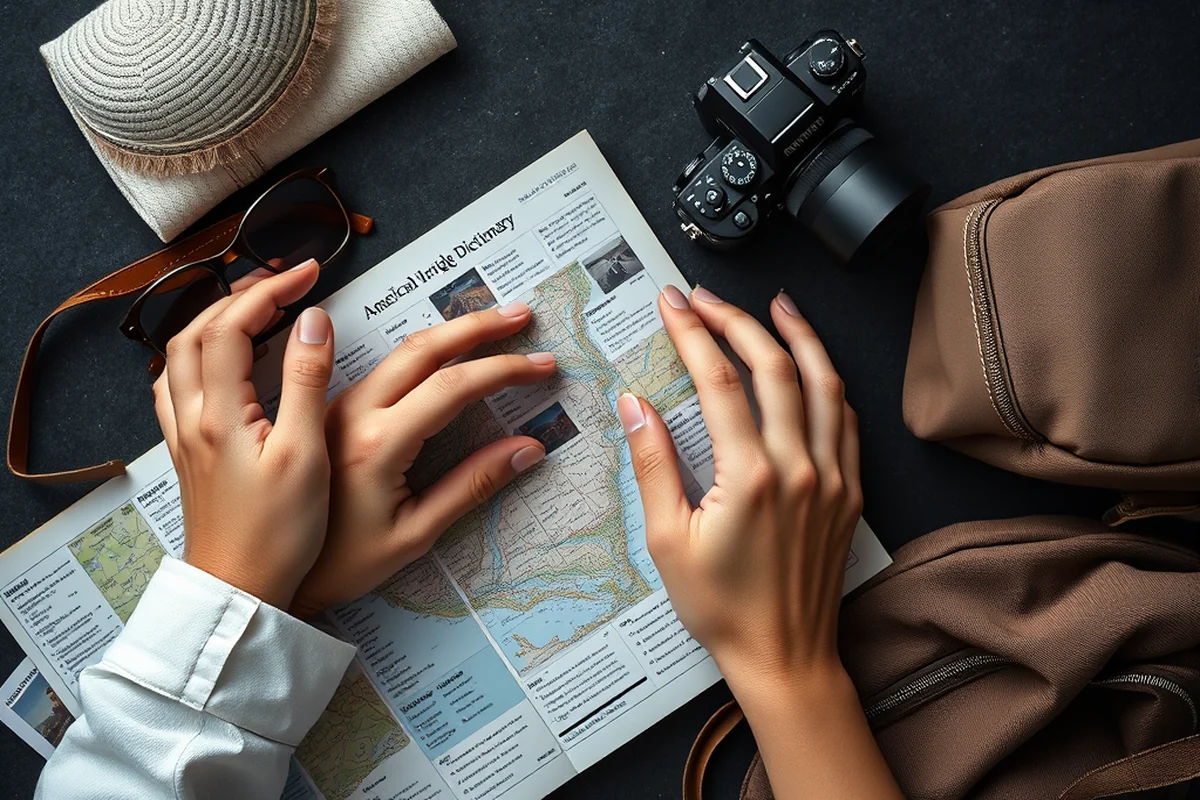
While many people think of the American Heritage Dictionary as a literary tool, I've found it incredibly useful in practical situations as well. Whether I was trying to order a meal in a small town in Vermont or understand a local custom in New Mexico, the dictionary helped me bridge the language gap.
For example, I once encountered a local shopkeeper in Maine who used the word 'crimp' in a way that was unfamiliar to me. After consulting the dictionary, I realized it was a local term for a specific type of fishing net. This knowledge allowed me to communicate more effectively and even engage in a deeper conversation about the region’s fishing traditions.
The dictionary’s practical value becomes even more apparent when you’re traveling in areas with distinct dialects or cultural practices. It’s a tool that helps you not only understand the language but also handle the nuances of the local way of life.
Related: What is a butterfly exhibit
The Dictionary as a Time Machine
One of the most fascinating aspects of the American Heritage Dictionary is its ability to transport you back in time. Every entry is a snapshot of a moment in history, revealing how words have changed and how they've influenced the world around us. I found this especially useful when I was in New Orleans, where the French and Spanish influences on the local language were still evident.
I remember reading about the word 'coup de grâce' and realizing that it was a term I’d heard before in the context of boxing. The dictionary explained its origins in French and how it had been adopted into American English. It was a revelation to see how a single word could carry such a rich and complex history.
What makes the dictionary so powerful as a time machine is that it doesn’t just tell you what a word means — it tells you where it came from and how it got there. This understanding helps you see the world through a different lens and appreciate the deep connections between language, history, and culture.
Related: What is the kunsthistorisches museum vienna
The Dictionary as a Travel Journal
I’ve used the American Heritage Dictionary as a personal travel journal, writing notes in the margins about the places I’ve visited and the words that have stood out to me. It’s a way of preserving the language and culture of the places I've been to, and it’s also a great way to reflect on the journey I’ve taken.
For instance, while traveling through the Southwest, I wrote down the word 'hózhǫ́n' in the margins of my dictionary, along with a brief explanation of its meaning and its significance in Navajo culture. It was a small but meaningful act that helped me remember the experience and connect with the place in a more personal way.
The dictionary’s role as a travel journal is especially powerful when you're visiting places with a rich cultural heritage. It helps you create a personal record of your journey that’s both informative and emotionally resonant.
Every word in the dictionary is a story waiting to be discovered — and every story is a memory waiting to be made.
Related: What is exhibit b
The Dictionary and the Art of Travel Writing
As a writer, I’ve found the American Heritage Dictionary to be an invaluable tool with travel writing. It helps you not only describe places but also understand the nuances of the language and culture that shape them. I remember using the dictionary to write about my visit to New Orleans, where I wanted to capture the city’s unique blend of French, Spanish, and African influences.
The dictionary’s detailed footnotes and historical context helped me craft a more authentic and engaging narrative. Instead of just describing the city’s landmarks, I was able to explore the stories behind the words and the people who used them, making the article more vivid and insightful.
What makes the dictionary so useful for travel writing is that it helps you see the world not just as it is. As it was — and how that past continues to shape the present. It’s a tool that helps you write with greater depth, accuracy, and meaning.
💰 Budget Traveler
Travel light and learn deep with the American Heritage Dictionary — a compact, affordable companion for the cost-conscious traveler.
🧳 Long Weekend Explorer
Pack the American Heritage Dictionary for a weekend getaway — it’s the perfect size to take along on short trips and still offer rich insights into the places you visit.
👨👩👧👦 Family Journey
Introduce your kids to the rich history of language with the American Heritage Dictionary — it’s a fun and educational way to explore the world together.
🧣 Off-Season Adventurer
The American Heritage Dictionary is a great companion for off-season travel — it helps you connect with the culture and history of a place even when the crowds have thinned out.
💎 Luxury Explorer
Enhance your luxury travel experience with the American Heritage Dictionary — a timeless and elegant addition to your collection of travel essentials.
| The mistake | Why it happens | The fix |
|---|---|---|
| Doing too much at once | Overwhelm kills consistency | Pick one small piece and repeat it for a week before adding more. |
| Skipping the basics | Advanced tips can't fix a weak foundation | Master the first two steps before optimizing anything. |
American Heritage Dictionary
Common Questions
How can the American Heritage Dictionary enhance my travel experience?
Is the American Heritage Dictionary useful for short trips?
Can the dictionary help me learn local dialects?
Is the dictionary suitable for travelers with limited time?
References
- Architecture - Montana Historical Society (mhs.mt.gov)
- (PDF) English Words: History and Structure - Academia.edu (academia.edu)
- Fostering Language Learning in the University EFL Classroom ... (files.eric.ed.gov)
Cite this guide
Cultural Archaeology Travel (2026). Why the American Heritage Dictionary Is a Traveler’s Best Friend. https://pastandpath.com/american-heritage-dictionary/
Feel free to cite or share this guide.